For Basa fish, we can process a lot of delicious and nutritious dishes such as deep-fried basa fish, Basa sour soup, etc. Vietnamese families are very fond of hot pot dishes, so basa fish hot pot will be extremely great food for tourists when coming to Chau Doc.
Nowadays, there are more and more green and responsible tours which are meaningful and educational as well. This is why Can Tho noodle factory is getting popular for both Vietnamese and foreigners to come and explore the cuisine culture and the typical local life in Can Tho, Mekong Delta.
5. Pro tips:
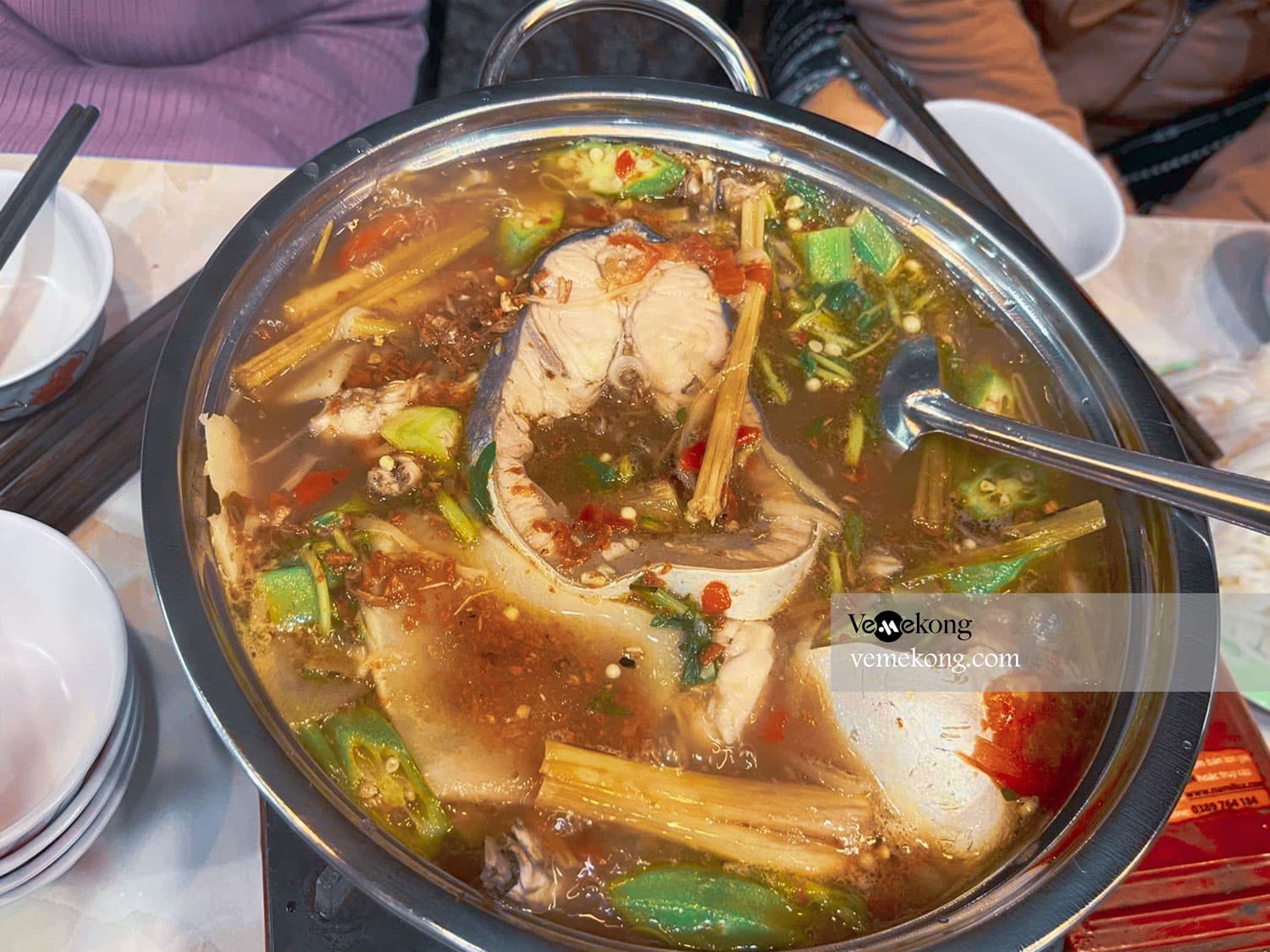
Basa Fish Hotpot – Eat Best Food in Chau Doc
1. Better to Know as a Food Lover
Find them: Chau Doc City
Best time: Dusk-Dawn
Don’t miss: Basa fish hotpot
Local’s pick: Chau Doc Market
Tourist’s pick: Chau Doc Night Market, Cam Mountain, Bay Bong 2 Restaurant…
Facts: It is called Basa fish hot pot because the main ingredient of the dish is fresh basa meat combined with a rich and flavorful soup.
2. Better to Know Basa Fish Hotpot
What is special about Basa fish in Chau Doc? Chau Doc is the land where the Hau river flows through, creating a huge fish production for this land. Elsewhere, Basa fish are raised by farmers and supplied to consumers, but Basa fish in Chau Doc are fish that come from nature, so the meat is very sweet and has no fishy taste. Although the Basa fish here is small, it has a unique flavor that makes it hard for visitors to forget its great taste.
3. Basa Fish Hotpot in Chau Doc
Sweet & Sour soup with Basa Fish – Eat Best Food in Chau Doc
Basa fish hotpot is actually a traditional sour soup of Southern households. cooked with Basa fish ingredients, both fatty and sweet. The dish is full of salty, sweet, sour, spicy and fatty flavors. served in a pan to keep warm throughout the meal.
The vegetables are slowly dipped according to the taste of the person enjoying, then the vegetables will not be soft, and the fish is always kept hot, making the eater feel more delicious. Basa fish hot pot served with fresh vermicelli is the best.
4. How to Make Basa Fish Hotpot
Prepare ingredients for cooking Basa fish hot pot:
Pangasius: About 1kg
Pork bone broth: 2 liters
4g shrimp seasoning
1 mint
3 okras
2 tomatoes
1/4 pineapple
1 small tamarind juice
Braised vegetables, coriander, horn chili
Gun stalks, pumpkins
Fried garlic, spices
Fresh vermicelli
How to cook simple Basa fish hot pot at home
Step 1: When you buy fish, you cut the fish into slices, rinse with water and then dry. Basa fish cut into bite-sized pieces for easy processing
Step 2: Vegetables, you just need to wash them with water or add a little salt to dilute them for cleaner vegetables.
Step 3: Take out the fig stalk and cut each stalk about 5cm
Step 4: Pumpkin flowers remove sepals and stigmas.
Step 5: Mint you peel off, cut short, wash, you can cut triangles. Set aside.
Step 6: You catch a large pot on the stove, then add water, season with shrimp seasoning, and put tamarind in the pot.
Step 7: You use a spoon to pick up each tamarind seed, start putting the fish in the pot, at this time you should keep the heat low, take a tablespoon to remove the foam.
Step 8: You observe that the fish is cooked, you can take the fish out and put it in a separate dish, next you put the tomatoes in.
Step 9: You pour the cooked broth into the hot pot earlier, sprinkle it with coriander, braised vegetables, and a few slices of chili.
Step 10: So, you have finished cooking fish hot pot, you can eat it with vermicelli, instant noodles, each piece of fish and dipping it with Phu Quoc fish sauce is nothing like
When cooking a Basa fish hot pot, you should drop the fish into the broth when the water is hot. If you put the fish in the pot from the beginning, when the water is still cold, the dish will taste fishy.
Some people like to fry the fish until golden brown and then drop the fish in to avoid the fishy taste, however, this way makes the fish no longer have the characteristic natural sweetness of the dish. You can also add other vegetables to the hot pot such as squash, water lily, and braised vegetables. According to the taste of the North, you can add water spinach, banana vegetables, and natural flowers.
5. Pro tips:
Here are our tips for easing your mind (and stomach) around food-handling environments that you may not be used to.
Make sure the food is freshly cooked. If you're eating hot street food, it's always safest (not to mention more delicious) to eat food you can see being cooked to order.
Look for lines and busy stalls. Busy street food stalls are an indicator of popularity, and their high turnover rate means the food is never sitting out for hours and developing dreaded bacteria. Yes, long lines can be discouraging when you’re hungry after a full day of exploring, but it’s not worth the risk of grabbing precooked food from the empty spot next door.
Eat when the locals are eating. The last and most important element here is when to eat. You’re likely already on a weird eating schedule while you’re traveling, but it’s important to try and adjust to the eating times of where you are. A bowl of pho might be lunch for Americans, but it’s breakfast for the Vietnamese. This ensures that you’re eating freshly cooked food and that you can find the best and most popular places to eat.
If you can’t drink the water, then you can’t eat the salad. Most people get so hung up on not drinking the water or skipping ice in drinks that they don’t think about all of the other ways in which water is used in food service. Fruits and vegetables tend to be washed with tap water in most places, rather than the filtered water that locals drink—or sometimes it’s not washed at all. If you’re really craving some produce, try fruits you can peel or cooked veggies.
Trust your gut. If you’re unsure about the food or the way that it’s being prepared, then keep moving. Eating street food all over the world doesn’t make you an expert. Every stall and every country are different, and sometimes the rules can be harder to follow. When something doesn’t look, smell, or feel right, don’t eat it! Trust your judgment. Chances are that there’s another spot close by that’s making something more delicious.