Lau Mam – Fermented Fish Hotpot – Eat Best Food in Can Tho
It can be said that Mam (fermented fish) has become a very familiar dish in the life of people in the South. From Mam, people can make many different dishes such as: steamed Mam, stir-fried Mam with lemongrass or simply eat Mam with boiled meat with raw vegetables and noodles. with the rustic flavor of the river countryside. This is a dish that is very popular with Southern people because of its taste and attractive and rustic ingredients.
Nowadays, there are more and more green and responsible tours which are meaningful and educational as well. This is why Can Tho noodle factory is getting popular for both Vietnamese and foreigners to come and explore the cuisine culture and the typical local life in Can Tho, Mekong Delta.
Facts: Every time you have the opportunity to come from afar to Can Tho, you will enjoy a delicious hot pot of fermented fish, as a gift from the countryside that the people of the river want to convey their thoughts, feelings and more. It is the rich flavor of this specialty, which always fascinates people to enjoy, which today has become a special specialty of this land.
2. Better to Know Lau Mam – Fermented Fish Hotpot
Some people say Lau Mam originated from Chau Doc city, An Giang province, but the origin of Lau Mam is from the Khmer and over time was converted into today's fish hot pot. This is a type of culinary culture between the indigenous Khmer and the original Southerners. The variation of this dish is the epic vegetable plate with dozens of different vegetables.
3. Lau Mam – Fermented Fish Hotpot in Can Tho
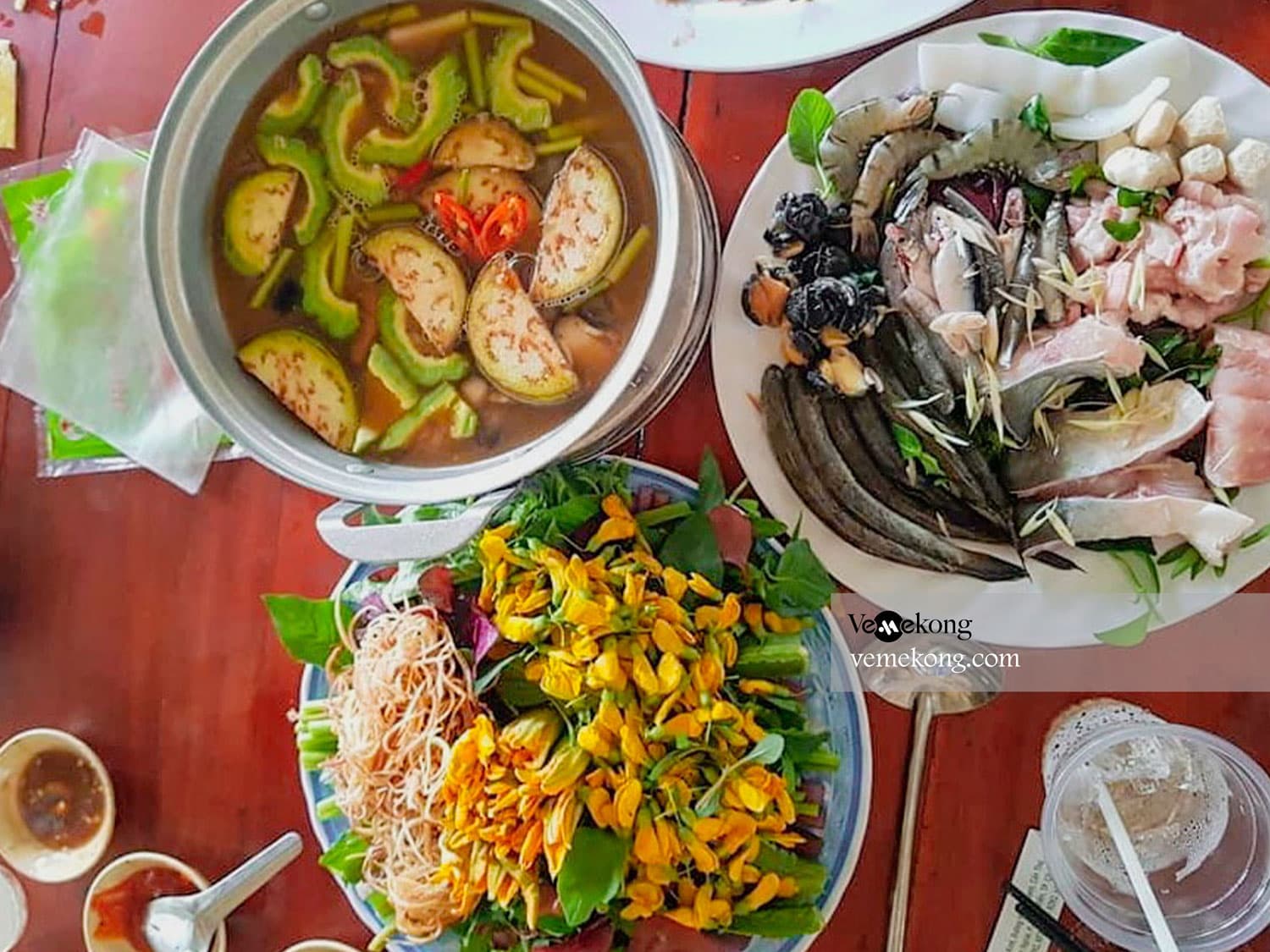
Lau Mam Bong Dien Dien – Fermented Fish Hotpot With Dien Dien flower (Sesbania Sesban flower) – Eat Best Food in Can Tho
When it comes to a delicious fermented fish hot pot, the broth must be mentioned. An attractive hot pot with fermented fish always has the sweet taste of hot pot with fresh ingredients served with raw vegetables. Normally, fermented fish is simmered from two types of fermented fish, which are Linh fermented fish and choke fermented fish, when using water to cook fermented fish for natural sweetness without having to add MSG, people usually boil fermented fish with bone broth and water coconut for natural sweetness. The fermented fish is simmered to melt the meat and bones, then filtered again to cook in a hot pot. A special feature in fermented fish hot pot, can only be cooked with Linh fermented fish and choke fermented fish to qualify for an attractive broth.
To reduce the characteristic smell of fermented fish, increase the aroma. People often stir-fry garlic, lemongrass and chili with bacon until fragrant, then add filtered broth to cook. After boiling, season to taste, in addition, to make the smell of fish, we can add a few crushed lemongrass and eggplant, fragrant to create more sweetness for the dish. To create an attractive fermented fish hot pot, in addition to the broth that needs to be cooked well, it is indispensable for accompanying ingredients such as: fish, squid, shrimp and roasted pork. Especially with the delicious taste of the fermented fish hotpot served with cotton balls, it will be more attractive because of the fatty taste of the fish. More points for a pot of fermented fish must mention the accompanying vegetables. A visitor said: “When I eat your fermented fish hotpot, I find the smell a bit unpleasant at first, but when I enjoy it, it has a very special and delicious taste, and moreover, this fermented fish hotpot makes me like it the most vegetables, it looks amazing”
Indeed, when you enjoy a hot pot of fermented fish, the thing that impresses you the most besides the taste of the broth is the presentation of the vegetable plate, which looks very attractive with vegetables bearing the character of the river. water such as bitter melon, coriander, morning glory. water lily, sorrel, squash, eggplant, bananas, bitter vegetables, dragon beans, mustard greens, etc., depending on the region, the vegetables are also more diverse and richer.
Lau Mam is considered a dish that fully synthesizes the ingredients of rivers, lakes, and fields, and especially a rich and varied amount of raw vegetables, creating a very attractive color: yellow color of pumpkin flower; purple color of water lily, eggplant; The green color of vegetables, bitter vegetables…with such a variety of accompanying foods and vegetables, it has brought diners not only the beauty but also created the appetite and provided a rich amount of nutrients.
It can be said that the pinnacle of the art of enjoying the fermented fish of the Southern people is the fermented fish hot pot: the fragrant aroma of the fermented fish hot pot, the sweetness of fish, shrimp, squid and the crispy taste of raw vegetables, blended together create a typical dish of the South. This is also a dish that shows the talent and ingenuity in the cooking art of the Southern people, reflected in the decoration of the dish and in the way of eating through the color combination that attracts the eyes of diners. Color, flavor, taste in each ingredient: white, blue, purple, yellow... and full of sweet, salty, and spicy flavors.
4. How to Make Lau Mam – Fermented Fish Hotpot
Ingredient
100g choke Mam
100g Linh fermented fish
300g basa fish
300g shrimp
300g squid
300g roast pork
300g pork belly
500g fresh vermicelli
200g pineapples
Buffalo horns, purple onions, garlic bulbs, 3 lemongrass plants 500ml coconut water + 1.5 liters of filtered water
1 teaspoon seasoning
2 tablespoons with rock sugar
3 tablespoons cooking oil Water spinach, squash, bitter vegetables, water lily, water hyacinth, spinach, eggplant
Cooking steps
Process materials
Vegetables bought and cleaned: shaved water spinach, water lily, coriander, cut water hyacinth to taste.
Cut eggplant in half and then cut into slices 1-2 cm thick.
Bacon is only washed with salt to remove the fishy smell, then sliced thinly.
Peel the shrimp or leave the shell on as you like.
Cut the squid into pieces about 2-3cm long.
Basa fish is cleaned and cut into slices.
Lemongrass smashed, minced the root, lemongrass leaves cut into pieces.
Minced onion and garlic.
Pineapple cut into slices.
Horny chili peppers, sliced diagonally or trimmed with flowers, are used to season and decorate the hot pot
Pre-boiled seafood
North on the stove 1 liter of water. Wait for the water to boil, add 3 purple onions to make the seafood more fragrant when boiling. In turn, add shrimp, squid, and basa fish and boil briefly. Save the boiling water.
Cooking hot pot with fermented fish
Put 500ml of cold water + 500ml of coconut water + 100g of Linh fermented fish + 100g of choking fermented fish into the pot and turn on the stove to boil. Stir well for the fermented fish to disintegrate, then turn off the heat, use a racket to remove the fish bones. Put the fermented fish in the pot of boiling water in the above step to form a seasoning.
Heat a pan on the stove, add 3 tablespoons of cooking oil and the garlic, lemongrass, and onion mixture until fragrant. Add pork belly and stir-fry together, add a teaspoon of seasoning, stir until the meat is firm.
Pour the seasoning water into the pot. Wait for the water to boil, then put pineapple and lemongrass in. Add 2 teaspoons of rock sugar. Wait for the pineapple to soften, then take it out, put the chopped eggplant in the pot, wait for 2 minutes, then turn off the heat.
Then pour the seasoning water into the hot pot, arrange the accompanying ingredients such as raw vegetables, squid, fish, shrimp, roasted pork, fresh vermicelli and enjoy.
Some note
A delicious fermented fish hot pot requires fresh and clean ingredients. Meat, fish, squid, shrimp are just cooked, not too soft. Therefore, when pre-processing, care should be taken not to overcook the ingredients. The vegetables can be eaten wherever they are for crispy and delicious vegetables. When buying pineapple, you should cut off the eye part so that when you eat it, your tongue won't burn.
5. Pro tips:
Here are our tips for easing your mind (and stomach) around food-handling environments that you may not be used to.
Make sure the food is freshly cooked. If you're eating hot street food, it's always safest (not to mention more delicious) to eat food you can see being cooked to order.
Look for lines and busy stalls. Busy street food stalls are an indicator of popularity, and their high turnover rate means the food is never sitting out for hours and developing dreaded bacteria. Yes, long lines can be discouraging when you’re hungry after a full day of exploring, but it’s not worth the risk of grabbing precooked food from the empty spot next door.
Eat when the locals are eating. The last and most important element here is when to eat. You’re likely already on a weird eating schedule while you’re traveling, but it’s important to try and adjust to the eating times of where you are. A bowl of pho might be lunch for Americans, but it’s breakfast for the Vietnamese. This ensures that you’re eating freshly cooked food and that you can find the best and most popular places to eat.
If you can’t drink the water, then you can’t eat the salad. Most people get so hung up on not drinking the water or skipping ice in drinks that they don’t think about all of the other ways in which water is used in food service. Fruits and vegetables tend to be washed with tap water in most places, rather than the filtered water that locals drink—or sometimes it’s not washed at all. If you’re really craving some produce, try fruits you can peel or cooked veggies.
Trust your gut. If you’re unsure about the food or the way that it’s being prepared, then keep moving. Eating street food all over the world doesn’t make you an expert. Every stall and every country are different, and sometimes the rules can be harder to follow. When something doesn’t look, smell, or feel right, don’t eat it! Trust your judgment. Chances are that there’s another spot close by that’s making something more delicious.