Cassava silkworm cake is a rustic dessert of the Southern people, associated with the childhood of many people from rural to urban areas. Traveling to Can Tho, visitors will taste the unique flavor of this simple rustic folk cake.
Nowadays, there are more and more green and responsible tours which are meaningful and educational as well. This is why Can Tho noodle factory is getting popular for both Vietnamese and foreigners to come and explore the cuisine culture and the typical local life in Can Tho, Mekong Delta.
5. Pro tips:
Cassava Silkworm Cake – Eat Best Food in Can Tho
1. Better to Know as a Food Lover
Find them: Ninh Kieu District, Can Tho city.
Best time: Dusk-Dawn
Don’t miss: Coconut milk handmade
Local’s pick: Folk Cake Festival
Tourist’s pick: Xuan Khanh market, Co 7 sweet soup restaurant, De Tham Street food zone…
Facts: It is called cassava silkworm cake because it has an elongated shape and is covered with coconut crumbs like a silkworm. Cassava silkworm cake is chewy, fragrant and greasy, often eaten with roasted sesame and white sugar.
2. Better to Know Cassava Silkworm cake
Cassava Silkworm Cake – Eat Best Food in Can Tho
The cake of the "country people" carries in it a fatty, sweet and irresistible taste, stimulating the taste, smell and sight of the eater. Since childhood, silkworm cake with green yarn and red yarn wrapped in a piece of freshly peeled banana leaf with the smell of plastic has been a breakfast dish, a snack to help our students fill their stomachs. Almost at the school gate or any market, there are a few aunts selling these rustic cakes on extremely attractive trays and bamboo mats, passing by cannot turn a blind eye.
Choose the right potatoes, delicious new cakes
This beautiful little cake, at first glance, you will think the processing is simple, but it's not. It is also because of the meticulous, sophisticated, laborious and time-consuming processing stages that the silkworm cake is gradually lost. To have a good batch of silkworm cakes, bakers need not only strong skills but also skills in choosing suitable cassava ingredients.
It's just cassava, but there are two types: three-month noodles and six-month noodles. Three-month noodles are noodles harvested after three months of planting. This type of potato has a certain plasticity, is soft and sweet, only suitable for steaming, boiling with coconut water. If you want to make silkworm cake, using noodles for six months is sure to be delicious, grinding out more flour. Almost all six-month noodles are long and equally fat because they have absorbed the most nutrients from the soil. However, if you see that the tuber is fat, then surely the baker will have a hard time grinding the dough. Because the tubers that are too fat are usually old, running, fibrous, grinding is very difficult and will often be mixed with fiber in the flour.
The traditional way of making silkworm cakes pays great attention to the grinding of flour. Currently, cooking channels often do not guide this step, but instead use a blender to shorten the time. That is the difference and also the reason why the cake is less delicious than the traditional way. The powder when milled by machine, combed out, squeezed out will not achieve the same plasticity as manual grinding. In addition, there is an immutable rule when using cassava for cooking, which is that before cooking, all toxins must be removed in cassava, by soaking potatoes with diluted salt water for 4 to 6 hours (usually is soaked overnight) then processed. Unfortunately, most cooking channels, including celebrity chefs' channels, don't cover this principle.
Gift of a person with a heart
In order for the standard batch of silkworm cakes to be soft, delicious, and sweet, the dosage of additives mixed into the flour (pineapple juice, rose water, coloring agents, coconut milk, sugar, milk, vanilla...) must be weighed. plain. Also, there's no need to add any other flour to the potatoes. If you are a gourmet, you will immediately recognize where the batch of cakes is mixed with other flours such as cassava flour, rice flour. On today's market stalls or trolleys, most batches of silkworm cakes are mixed to increase the weight of the cakes and reduce costs, so the seller can make a lot of money. Such "mixed" batches of cakes when eaten will be tough, hard, not soft and fatty like original cakes
To make a batch of silkworm cakes, counting from the stage of peeling, soaking the toxic waste water to grinding the potatoes, squeezing out the water to get the flour, then decanting the water just squeezed to get the starch deposited on the bottom... takes the least. half a day. Why take the starch part? That's because even though it is a little bit, it is the most quintessential part of the dough, without it, the cake will lose more or less natural plasticity. Then comes the stage of beating the dough, mixing with additives, then steaming for at least half an hour. The batch of cakes taken out of the basket must wait for it to cool down and dry completely before it can be cut and shaped. Finally, you roll the cake fibers evenly through the layer of grated coconut so that the coconut rice is evenly coated, which also helps to spread the cake, not sticking to each other. The cake is delicious when sprinkled with a little golden roasted sesame and dipped with sesame salt.
A batch of delicious cakes with the right taste is definitely a batch of bakers who put all their heart into each cake, being careful, meticulous and delicate in each processing stage. It must be someone who knows how to appreciate each delicious piece, cherish the dishes with a nostalgic smell, thoroughly understand the origin and history of the dishes that they make. A good baker can also be a good storyteller, even if it's just the trivia surrounding the cake. At that time, people can enjoy delicious food like enjoying the quintessence of life.
Cassava silkworm cake is an ethereal rustic dish that many people remember, whether in their homeland or far away. It is not easy for people to order this cake as quickly as the fast foods that are filling up all the shops out there. When you meet the cake of nostalgia, it is precisely fate, because you are encountering the priceless old taste again.
3. Cassava Silkworm cake in Can Tho
Cassava Silkworm Cake – Eat Best Food in Can Tho
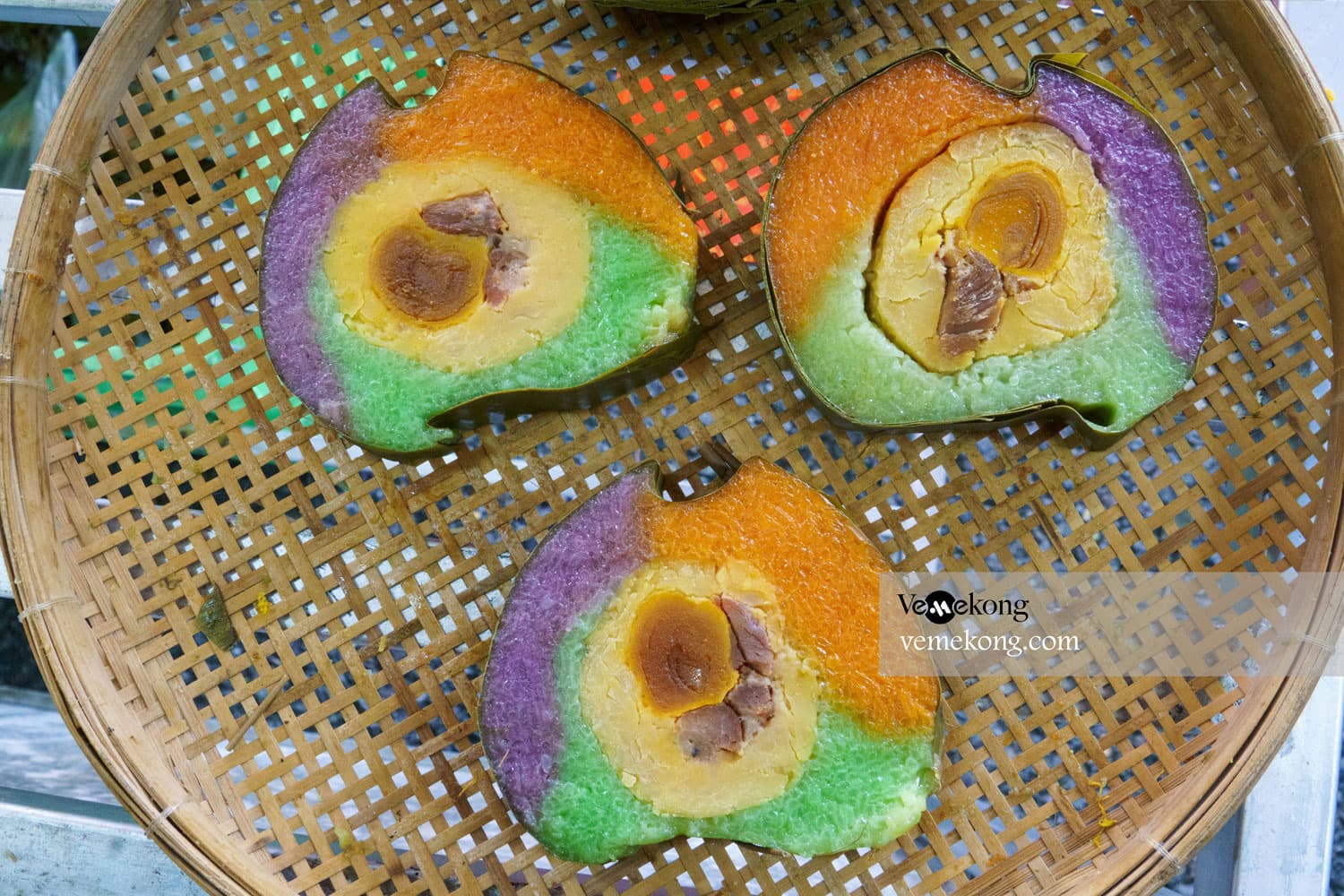
Cassava silkworm cake usually has an elongated shape like a silkworm but also has other shapes such as square, small rectangle ... depending on the taste of the maker. Cakes often have many different colors such as pandan green, rose leaves, white, yellow cassava ... The shell is usually wrapped by grated coconut that looks like the white silk of a silkworm. cassava silkworm cakes as well as other types of cakes made with cassava have the sweet taste of cassava (cassava). When eating, people often add roasted sesame salt, white sugar or coconut milk, making the cake become greasy, fragrant with sesame
4. How to Make Cassava Silkworm cake
Ingredients to make Cassava Silkworm Cake For 4 people
Cassava 2 kg
Cassava starch 100 gr
Grated coconut 200 gr
Coconut milk 100 ml
Reserved juice 20 ml
Pineapple juice 20 ml
1 leaf banana leaf
White sugar 150 gr
1 pinch salt
Implementation tools
Blender, steamer, bowl, spoon, brass...
How to cook Cassava Silkworm Cake
Step 1. Preliminary processing of cassava
Cassava, peeled, cut into pieces, soaked in diluted salt water for at least 2 hours, then drained and put in a blender.
Put the grated cassava into a cloth bag and squeeze to dry, leaving the potato carcass in a bowl.
Step 2. Mix cassava
You put in a bowl of cassava 150g sugar, 100g cassava starch, 100ml coconut milk and mix the mixture together.
You divide the cassava mixture into 3 equal parts, 1 part you leave whole, 1 part you mix with 20ml of gardenia juice, the rest of cassava you mix with 20ml of pandan leaf juice.
Step 3. Steamed buns
You in turn spread the cassava into thin rectangular layers.
Prepare a steaming pot, place the banana leaves in the steamer, steam for about 20 minutes with low heat until the potatoes are clear again.
Wait for the potatoes to cool completely for about 15 minutes, then cut the cake into thin slices about 1/4 inch thick.
Step 4. Make peanut salt
Roast peanuts, pound them, then add 50g of sugar, 10g of roasted sesame, 5g of salt.
You mix well to complete the peanut salt.
Step 5. Complete
You put silkworm cake on a plate, sprinkle evenly with a layer of grated coconut and then a layer of peanut salt and enjoy!
Step 6. Finished product
The cake is not only beautiful with eye-catching colors but also very delicious in taste.
The cake is chewy and chewy, with a sweet, fatty taste of grated coconut, adding a little peanut salt to make the taste of this western rustic dish more attractive than ever!
5. Pro tips:
Here are our tips for easing your mind (and stomach) around food-handling environments that you may not be used to.
Make sure the food is freshly cooked. If you're eating hot street food, it's always safest (not to mention more delicious) to eat food you can see being cooked to order.
Look for lines and busy stalls. Busy street food stalls are an indicator of popularity, and their high turnover rate means the food is never sitting out for hours and developing dreaded bacteria. Yes, long lines can be discouraging when you’re hungry after a full day of exploring, but it’s not worth the risk of grabbing precooked food from the empty spot next door.
Eat when the locals are eating. The last and most important element here is when to eat. You’re likely already on a weird eating schedule while you’re traveling, but it’s important to try and adjust to the eating times of where you are. A bowl of pho might be lunch for Americans, but it’s breakfast for the Vietnamese. This ensures that you’re eating freshly cooked food and that you can find the best and most popular places to eat.
If you can’t drink the water, then you can’t eat the salad. Most people get so hung up on not drinking the water or skipping ice in drinks that they don’t think about all of the other ways in which water is used in food service. Fruits and vegetables tend to be washed with tap water in most places, rather than the filtered water that locals drink—or sometimes it’s not washed at all. If you’re really craving some produce, try fruits you can peel or cooked veggies.
Trust your gut. If you’re unsure about the food or the way that it’s being prepared, then keep moving. Eating street food all over the world doesn’t make you an expert. Every stall and every country are different, and sometimes the rules can be harder to follow. When something doesn’t look, smell, or feel right, don’t eat it! Trust your judgment. Chances are that there’s another spot close by that’s making something more delicious.