Traveling to Can Tho, experiencing with folk cakes, you should not miss the taste of honeycomb cake (Banh Bo: cow cake) that captivates many people when tasting. Although grilled honeycomb cake is not a delicious dish, it promises to bring a distinct western feeling.
Nowadays, there are more and more green and responsible tours which are meaningful and educational as well. This is why Can Tho noodle factory is getting popular for both Vietnamese and foreigners to come and explore the cuisine culture and the typical local life in Can Tho, Mekong Delta.
Honeycomb Cake – Eat Best Food in Can Tho
1. Better to Know as a Food Lover
Find them: Ninh Kieu District, Can Tho city.
Best time: Dusk-Dawn
Don’t miss: Honeycomb cake
Local’s pick: Trien Chieu honeycomb cake
Tourist’s pick: Ut Dut honeycomb cake restaurant, Cow cake restaurant…
Facts: Honeycomb cake is a type of cake originating from southern China and popular in Vietnam.
2. Better to Know Honeycomb cake
Honeycomb Cake – Eat Best Food in Can Tho
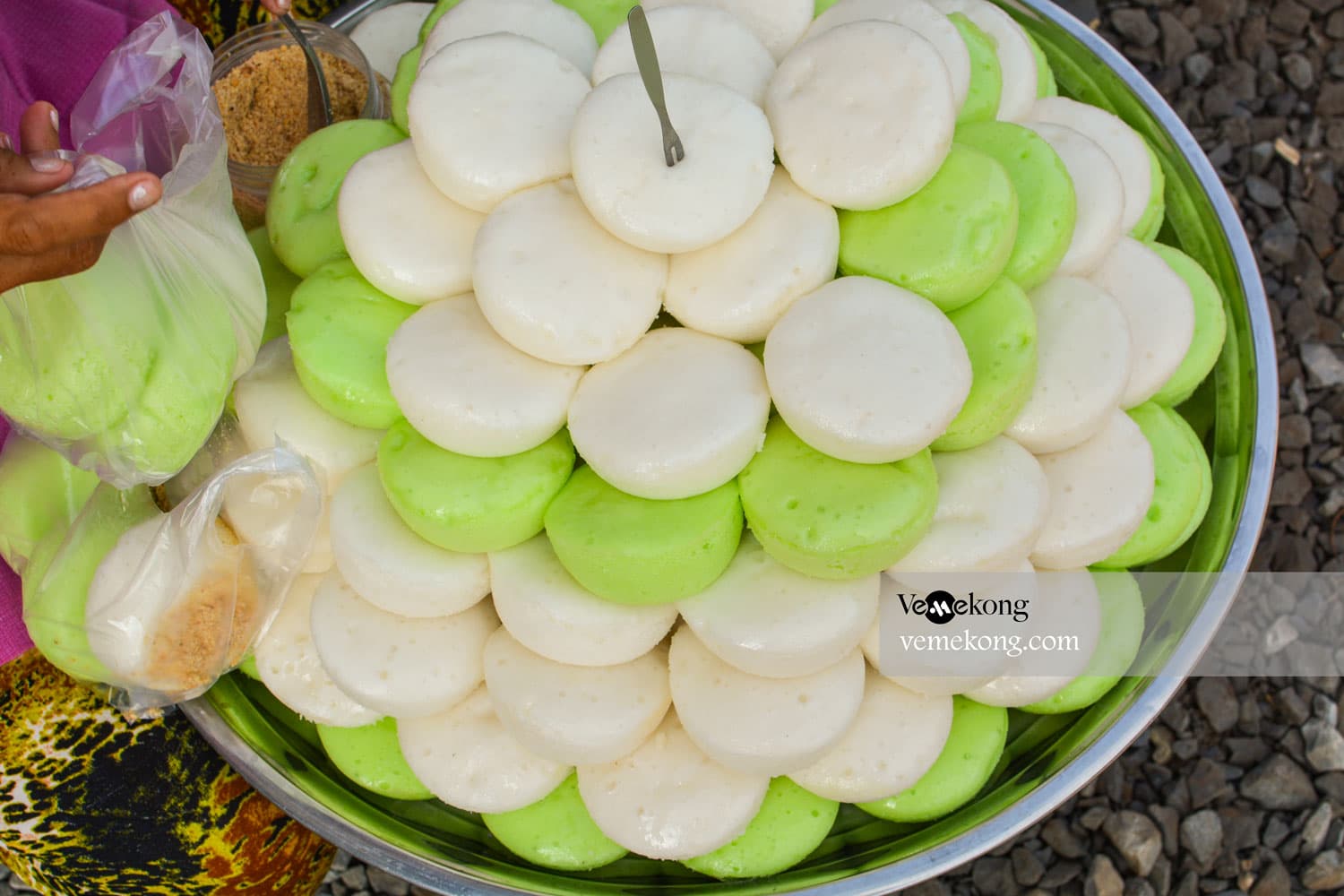
Honeycomb cake is a type of sponge cake made from: rice flour, water, sugar and yeast. The surface of the cake has a lot of small bubbles because there are many air holes in the cake. The type of honeycomb cake in China is called bai thang gāo (白糖糕) – literally “white sugar cake”, this honeycomb cake is a bit sour and omits the coconut ingredient – an indispensable ingredient in honeycomb cakes in Vietnam. Honeycomb cake is generally eaten as a dessert or eaten with spring rolls…
According to Paulus Huynh Tinh Cua's dictionary of Dai Nam Quoc Yin, this cake is named "cow cake" because it is "like a cow's udder". However, someone explained that, during the fermentation of the dough with yeast, the dough will "crawl" onto the rim of the dough bowl.
3. Honeycomb cake in Can Tho
Honeycomb Cake – Eat Best Food in Can Tho
Some typical honeycomb cakes in Can Tho City:
Steamed honey cake
Steamed honeycomb cake is the most diverse type of honeycomb cake that people often see in the tray of pepper cakes, or street stalls. Steamed honeycomb cake is made from a mixture of liquid flour (rice flour, tapioca flour, rice wine), without coconut milk. The cake usually has a small round or triangular shape cut from a large loaf. When the cake is torn, the inside is interlaced with "fibers" that look like bamboo roots, so in addition to the name steamed honeycomb cake, it is also called bamboo-root cake. In addition to eating with pepper cake, steamed honeycomb cake is also highly appreciated, served with coconut milk sprinkled with sesame salt and peanuts on top.
Grilled honeycomb cake
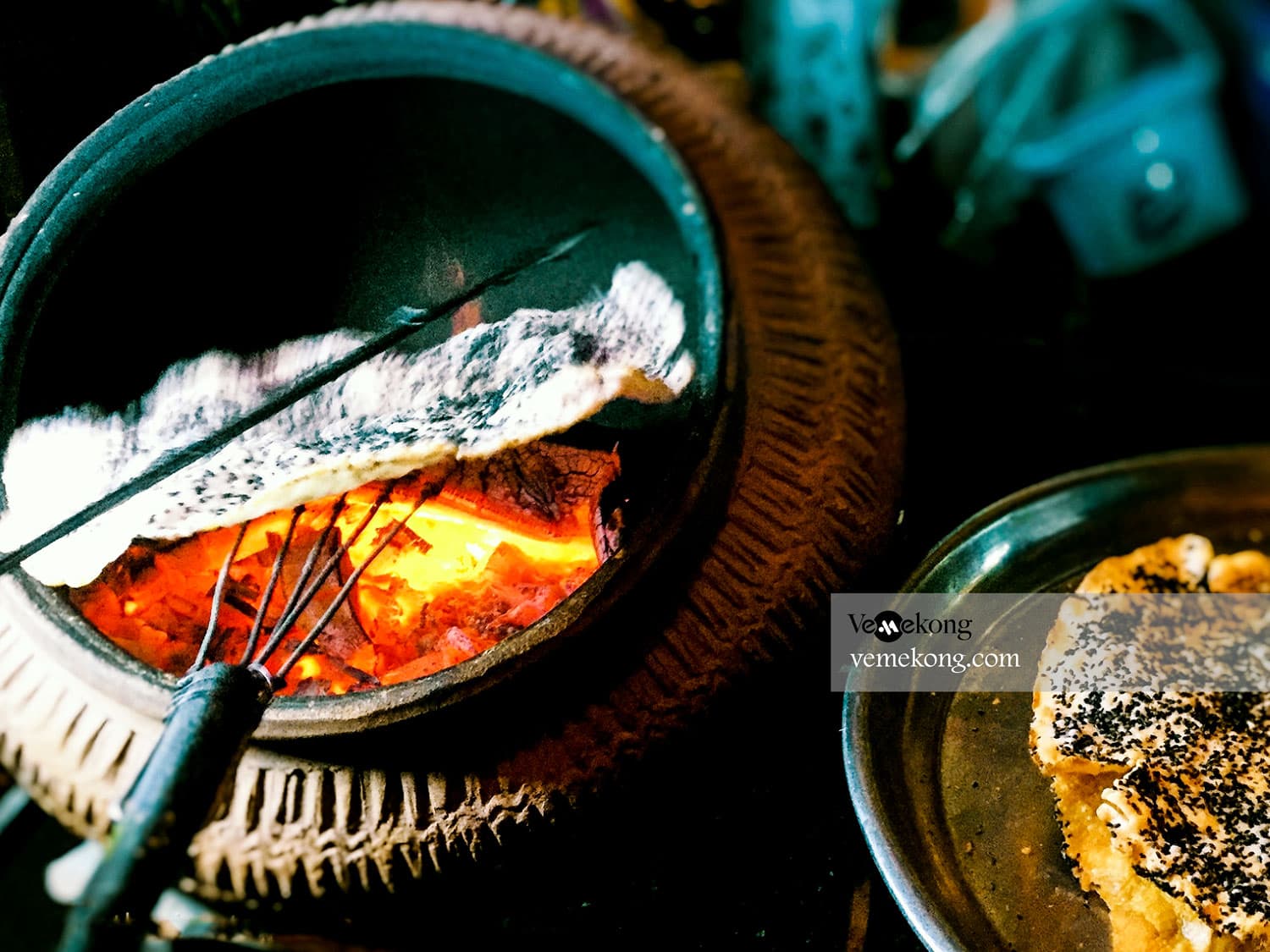
Grilled honeycomb cake is not only diverse in the West but also in the North or Central region, this type of cake has a mixture of flour like steamed honeycomb cake, and with coconut milk or in some places can replace the milk. coconut milk. Instead of steaming, grilled honeycomb cakes are cooked by pan grilling, often with a yellow outer layer thanks to baking, and the inside is also interlaced with "bamboo roots".
Chau Doc honeycomb cake with thot not sugar palm
Soft honeycomb cake and flaking honeycomb cake
Soft honeycomb cake and flaking honeycomb cake are two different types of honeycomb cake, but in terms of ingredients, both types of honeycomb cake are impressed by the milky white color and fragrant thanks to the coconut milk ingredient. The surface of the cake often has many small bubbles due to the fermentation process and the release of air when steaming in the pot. When eating, the cake has a sour, sweet and sour taste (depending on the type). The feeling of eating for the first time is like enjoying the crust of a dumpling.
4. How to Make Honeycomb cake
Honeycomb Cake – Eat Best Food in Can Tho
Ingredients for making sponge cake with coconut milk
Warm water: 210ml
White granulated sugar: 150g
Yeast: 5g
Vanilla powder: 1 pack
Coconut milk: 200ml
Salt
Rice flour: 200g
Tapioca flour: 50g
Roasted sesame
How to make delicious and greasy coconut milk sponge cake
Step 1:
Put yeast, 2 tablespoons of warm water, 1 tablespoon of sugar in a large bowl, stir until dissolved and leave for 10 minutes.
Put the vanilla powder, the remaining sugar, a little salt and coconut milk in a pot, put the pot on the stove. Heat the mixture on the stove over low heat, stirring constantly. Wait until the sugar dissolves into water, then turn off the stove.
Step 2: Knead the dough
Put the rice flour and tapioca flour in a bowl and add some cold water. Knead well until the dough is combined and smooth.
Step 3:
Pour the brewed yeast mixture in step 1 into the bowl of dough kneaded in step 2. Cover the dough with a damp towel and let it sit for about 7-10 hours.
Note: If you want the finished cake to have a beautiful green color, you can use pandan leaf juice mixed into the dough before brewing to create color.
Chau Doc honeycomb cake with thot not sugar palm
Step 4: Steam the cake
Put water in a steamer, bring to a boil. Put the bowl or cake mold into the pot (You can add a little cooking oil to the cup or mold to prevent sticking). Then put the dough in each bowl and steam.
Cooking time depends on how big or small the cake is. Usually about 20 minutes after the cake is cooked, if the cake is too big, it can take about 40 minutes.
Step 5: Enjoy the results
After the cake is cooked, remove the cake from the steamer and let it cool. Then, pull out the cake with a bamboo stick or toothpick and place it on a plate. Eaten with coconut milk and toasted sesame has the spongy taste of cake, the aroma of sesame and pandan leaves, and the greasy taste of coconut water.
5. Pro tips:
Here are our tips for easing your mind (and stomach) around food-handling environments that you may not be used to.
Make sure the food is freshly cooked. If you're eating hot street food, it's always safest (not to mention more delicious) to eat food you can see being cooked to order.
Look for lines and busy stalls. Busy street food stalls are an indicator of popularity, and their high turnover rate means the food is never sitting out for hours and developing dreaded bacteria. Yes, long lines can be discouraging when you’re hungry after a full day of exploring, but it’s not worth the risk of grabbing precooked food from the empty spot next door.
Eat when the locals are eating. The last and most important element here is when to eat. You’re likely already on a weird eating schedule while you’re traveling, but it’s important to try and adjust to the eating times of where you are. A bowl of pho might be lunch for Americans, but it’s breakfast for the Vietnamese. This ensures that you’re eating freshly cooked food and that you can find the best and most popular places to eat.
If you can’t drink the water, then you can’t eat the salad. Most people get so hung up on not drinking the water or skipping ice in drinks that they don’t think about all of the other ways in which water is used in food service. Fruits and vegetables tend to be washed with tap water in most places, rather than the filtered water that locals drink—or sometimes it’s not washed at all. If you’re really craving some produce, try fruits you can peel or cooked veggies.
Trust your gut. If you’re unsure about the food or the way that it’s being prepared, then keep moving. Eating street food all over the world doesn’t make you an expert. Every stall and every country are different, and sometimes the rules can be harder to follow. When something doesn’t look, smell, or feel right, don’t eat it! Trust your judgment. Chances are that there’s another spot close by that’s making something more delicious.