Ben Tre's Coconut Candy – Eat Best Food in Ben Tre
Ben Tre’s coconut candy is not only a processed dish for family entertainment, but it is also an intimate gift for friends and relatives. With quite simple ingredients from malt and coconut milk, it has made an interesting specialty that anyone who comes to Ben Tre must try once.
Nowadays, there are more and more green and responsible tours which are meaningful and educational as well. This is why Can Tho noodle factory is getting popular for both Vietnamese and foreigners to come and explore the cuisine culture and the typical local life in Can Tho, Mekong Delta.
Facts: Coconut candy is a type of candy made from the main ingredients of coconut rice and malt sugar. This is a specialty candy and a traditional craft imbued with the country's culture. In Vietnam, there are many coconut-growing areas, but Ben Tre is the birthplace and development of the coconut candy processing industry.
2. Better to Know Ben Tre's Coconut Candy
Ben Tre's Coconut Candy – Eat Best Food in Ben Tre
Ben Tre coconut candy originates from Mo Cay district. According to collected documents, the first person to make candy was Mrs. Nguyen Thi Ngoc, born in 1914, living in Quarter 1, Mo Cay town. Coconut candy at that time was called Mo Cay candy. In 1970, Nguyen Thi Vinh, born in 1945, lived in Ben Tre town, changed the way candy is processed. She established the Thanh Long coconut candy production facility, the first in Ben Tre town, and from there created the name Ben Tre coconut candy. Ingredients for making coconut candy include: coconut milk, malt, sugar (in the past people used canned sugar, but today we use granulated sugar). Malt is distilled from the sugar of sticky rice when it is incubated to germinate.
From the very rich source of coconut raw materials of Ben Tre, plus the ingenuity of the processor, the coconut people have known to add cultural values, the value of traditional manual labor to the product to make the fruit. Coconut is not only a source of raw materials but it has increased in value many times. Here, cultural factors in handicraft products have created economic value, contributing to improving and improving the lives of people in the coconut land. On the other hand, it is thanks to such economic development that traditional handicrafts are treasured, preserved and constantly developed.
Coconut candy production facilities have not hesitated to invest billions to innovate traditional candy production technology, creating more and more attractive designs and designs for customers. According to the old production tradition, coconut candy production facilities always attach great importance to quality, credibility, and do not use preservatives, chemical sugars and other banned substances to affirm their brands. As a result, Ben Tre coconut candy has been present in markets throughout the country and also exported to many countries in Asia, Europe and America.
3. Ben Tre's Coconut Candy in Ben Tre
Ben Tre's Coconut Candy – Eat Best Food in Ben Tre
The best Ben Tre coconut candies
Coconut candy with coconut milk
With the pure greasy taste of coconut milk when not mixed with other flavors. This type of candy is quite popular, especially suitable for customers who do not like their own deep smell.
Peanut gummy coconut candy
This coconut candy has peanuts left intact to give the candy a rich flavor when you chew. This Ben Tre coconut candy is also an ideal choice for you if you want to try different types of coconut candies.
Durian coconut candy
Durian when combined with coconut milk creates a greasy, delicious flavor and creates a delicious and different candy compared to other Ben Tre coconut candies.
Coconut candy Cocoa and cocoa durian
The characteristic aroma of cocoa, slightly bitter when mixed with coconut milk, creates a unique aroma, great for customers who like candy that is not too sweet. The combination of cocoa and durian also creates a different type of coconut candy with a different flavor than other common candies.
Pineapple coconut candy and pineapple durian gummy candy
This candy has the taste of faint pandan leaves, striped coconut candy, green white coconut candy with pandan leaf flavor that looks very attractive. This is a type of candy that many domestic and foreign tourists find and buy.
Coconut candy taro and strawberry jelly
The color and taste of these two candies are loved by ladies and children. You can try the candies before buying to feel the taste of the candies and choose the one you like best!
4. How to Make Ben Tre's Coconut Candy
Ben Tre's Coconut Candy – Eat Best Food in Ben Tre
Ingredient
Coconut milk: 220g
Sugar: 60g
Malt: 35g
Salt: 1g
Coconut oil, butter: 10g
Containers, stencils
Step 1: The coconut candy mold is lined with a layer of wax paper, press the stencil to be perpendicular to the candy mold and then set aside to prepare for the freezing process. Linen with parchment paper so the candy doesn't stick to the mold. You should line it with parchment paper, because the candy is very sticky, it will be a bit difficult to remove the candy from the mold.
Step 2: Put the ingredients prepared in the above part including coconut milk, malt, salt, and sugar into the pot. Turn on the stove on low heat to cook until the candy becomes thick. Measuring a temperature of about 125 degrees Celsius is okay. This candy slug you should stir constantly because the candy is quite sweet, so it will burn very easily.
Step 3: When you see that the candy is thick and sticky, the candy is done, quickly add coconut oil and pour the candy into the prepared mold.
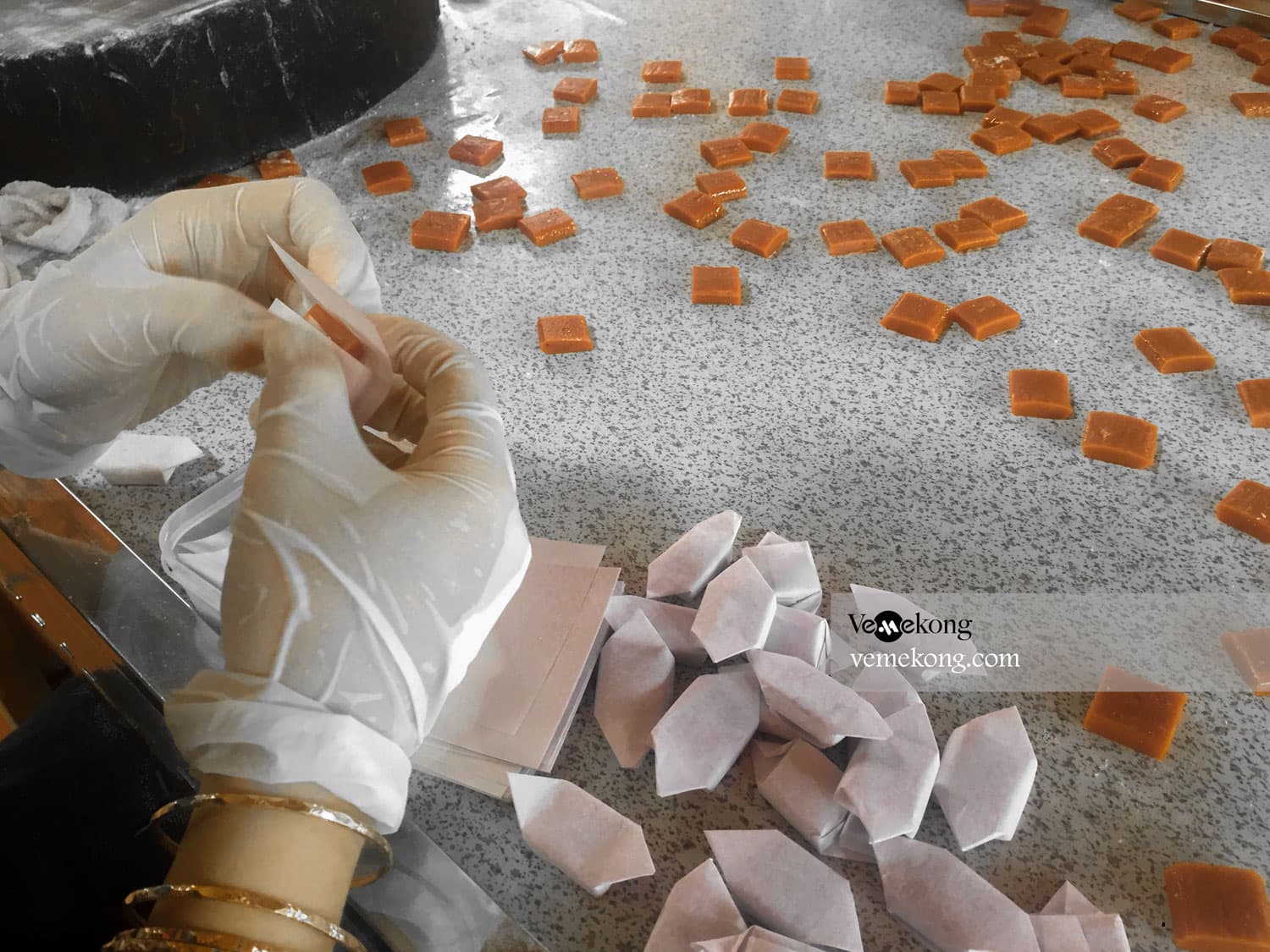
Step 4: Wait for the candy in the mold to freeze and dry down, cool down, then put the candy on a cutting board, apply a thin layer of cooking oil on the knife and then cut the candy into small squares about 1cm to taste. complete.
Step 5: Take candy wrappers or stencils to wrap the candy beautifully.
5. Pro tips:
Here are our tips for easing your mind (and stomach) around food-handling environments that you may not be used to.
Make sure the food is freshly cooked. If you're eating hot street food, it's always safest (not to mention more delicious) to eat food you can see being cooked to order.
Look for lines and busy stalls. Busy street food stalls are an indicator of popularity, and their high turnover rate means the food is never sitting out for hours and developing dreaded bacteria. Yes, long lines can be discouraging when you’re hungry after a full day of exploring, but it’s not worth the risk of grabbing precooked food from the empty spot next door.
Eat when the locals are eating. The last and most important element here is when to eat. You’re likely already on a weird eating schedule while you’re traveling, but it’s important to try and adjust to the eating times of where you are. A bowl of pho might be lunch for Americans, but it’s breakfast for the Vietnamese. This ensures that you’re eating freshly cooked food and that you can find the best and most popular places to eat.
If you can’t drink the water, then you can’t eat the salad. Most people get so hung up on not drinking the water or skipping ice in drinks that they don’t think about all of the other ways in which water is used in food service. Fruits and vegetables tend to be washed with tap water in most places, rather than the filtered water that locals drink—or sometimes it’s not washed at all. If you’re really craving some produce, try fruits you can peel or cooked veggies.
Trust your gut. If you’re unsure about the food or the way that it’s being prepared, then keep moving. Eating street food all over the world doesn’t make you an expert. Every stall and every country are different, and sometimes the rules can be harder to follow. When something doesn’t look, smell, or feel right, don’t eat it! Trust your judgment. Chances are that there’s another spot close by that’s making something more delicious.