Crab Noodle Soup at Floating Market – Eat Best Food in Can Tho
Vietnamese cuisine is extremely rich and unique with delicious dishes, clearly reflecting the culture and life here as well as the personality of the people here. There are dishes that just need to be named and you can see the whole land, there are many dishes with variations from the country and there are also dishes with variations from local cuisine. Typical of which is Crab noodle soup, a dish not to be missed every time guests come to Can Tho floating market.
Nowadays, there are more and more green and responsible tours which are meaningful and educational as well. This is why Can Tho noodle factory is getting popular for both Vietnamese and foreigners to come and explore the cuisine culture and the typical local life in Can Tho, Mekong Delta.
Facts: It is not known when crab noodle soup appeared in the North for more than 50 years.
2. Better to Know Crab Noodle Soup at Floating Market
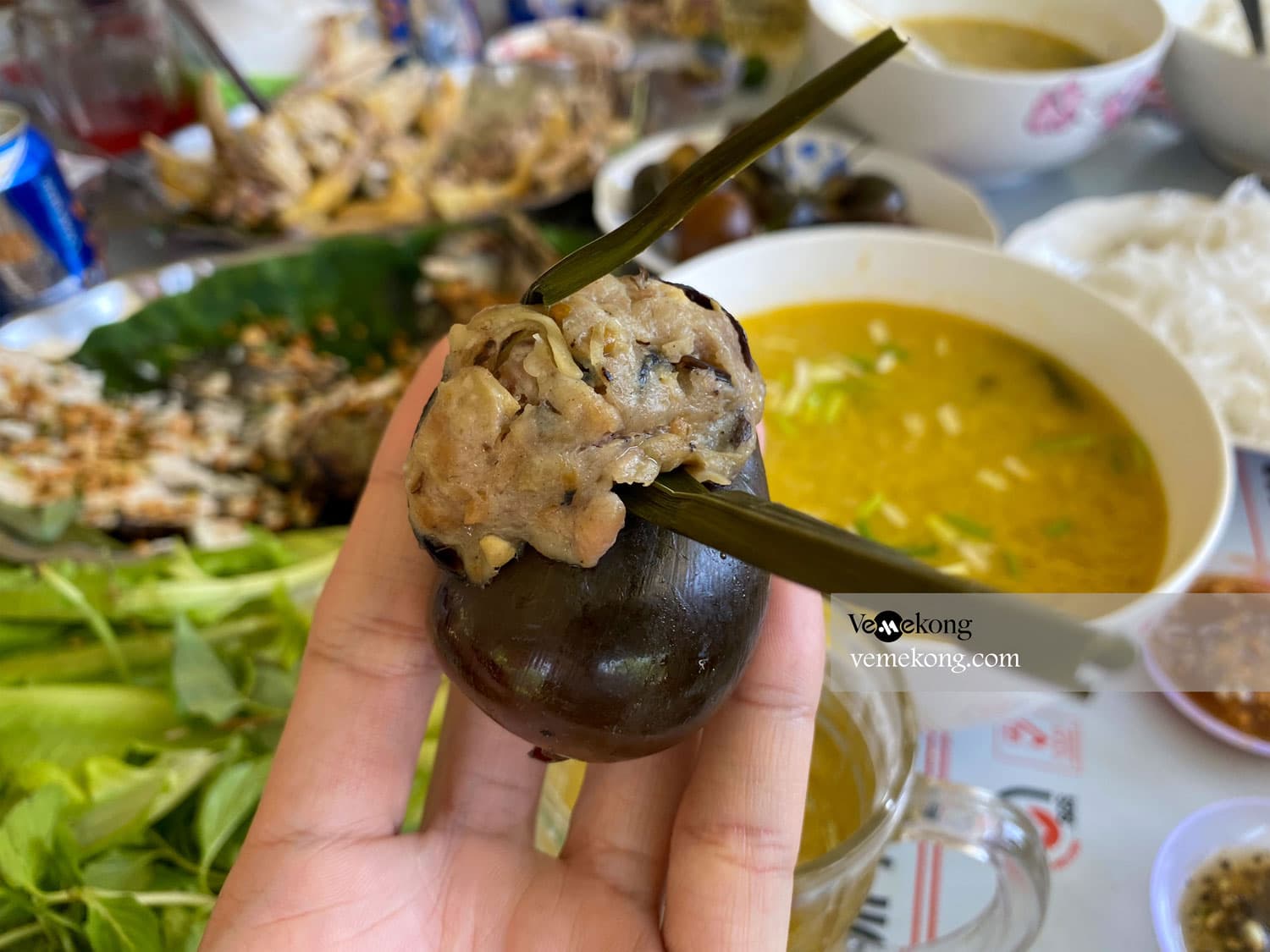
BBQ and Crab Noodle Soup at Floating Market– Eat Best Food in Can Tho
Origin of Crab noodle soup
Crab noodle soup, like most other noodle dishes, originates from the Northern Delta region. Originally, Crab noodle soup was just a row of broth cooked with crab sauce and served with vegetables and shrimp paste. Then, adding a little vinegar suddenly creates a slightly ethereal and gentle sour taste of Northern cuisine. Crab noodle soup had a variation and the South advanced extremely strongly into Saigon and the southern provinces. This land is famous for its abundance, there is no shortage of fish and shrimp all year round, so the bowl of Crab noodle soup is gradually changed and has the appearance of tofu, tomato, and pig's blood to create a unique blend of flavors suitable for Southern cuisine. Crab noodle soup from a rustic dish has developed into a dish that requires cooking techniques, requires a skilled cook and patiently simmers the bones to create a sweet Southern taste for the broth.
3. Crab Noodle Soup at Floating Market in Can Tho
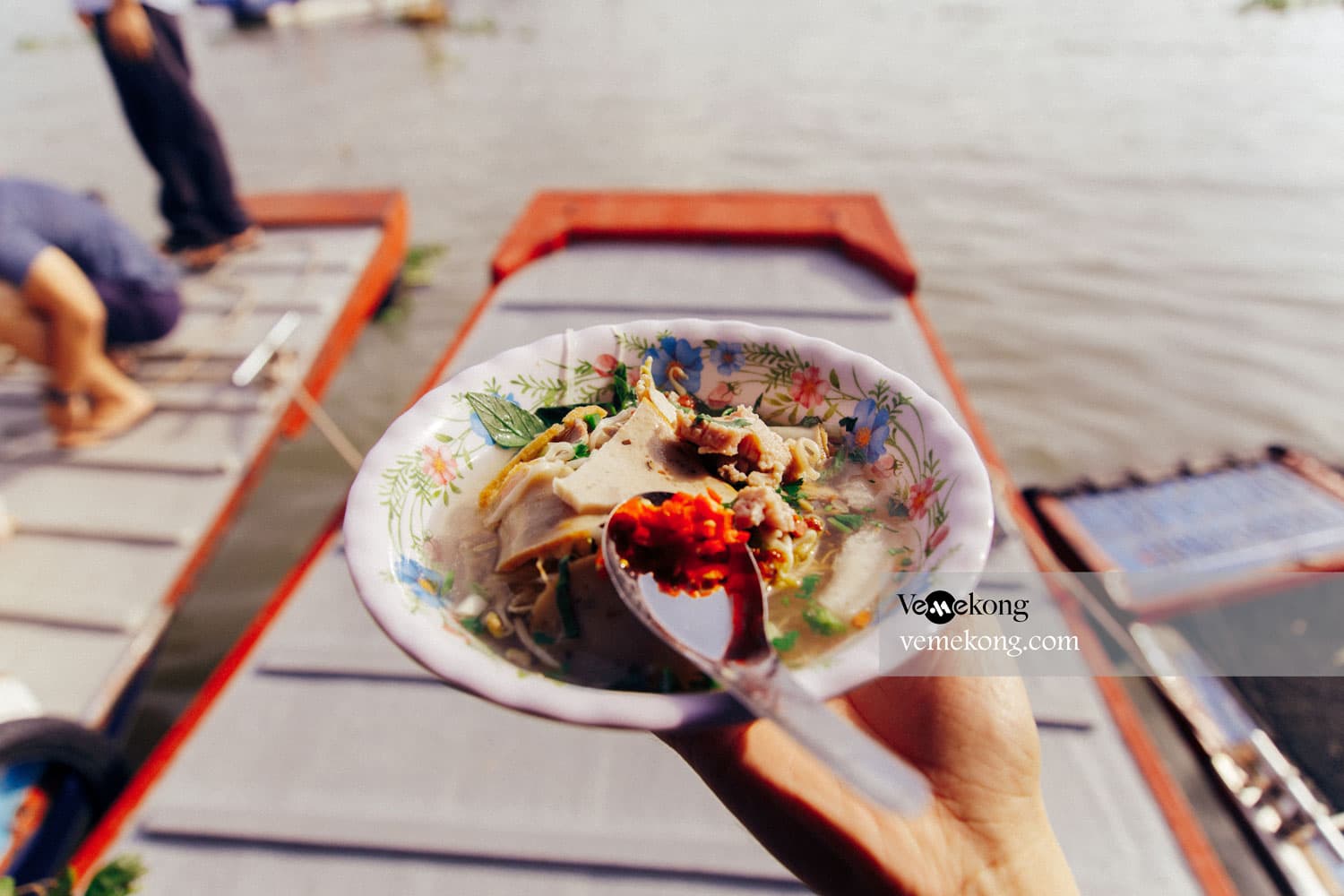
The tourists enjoy the Crab Noodle Soup at Floating Market– Eat Best Food in Can Tho
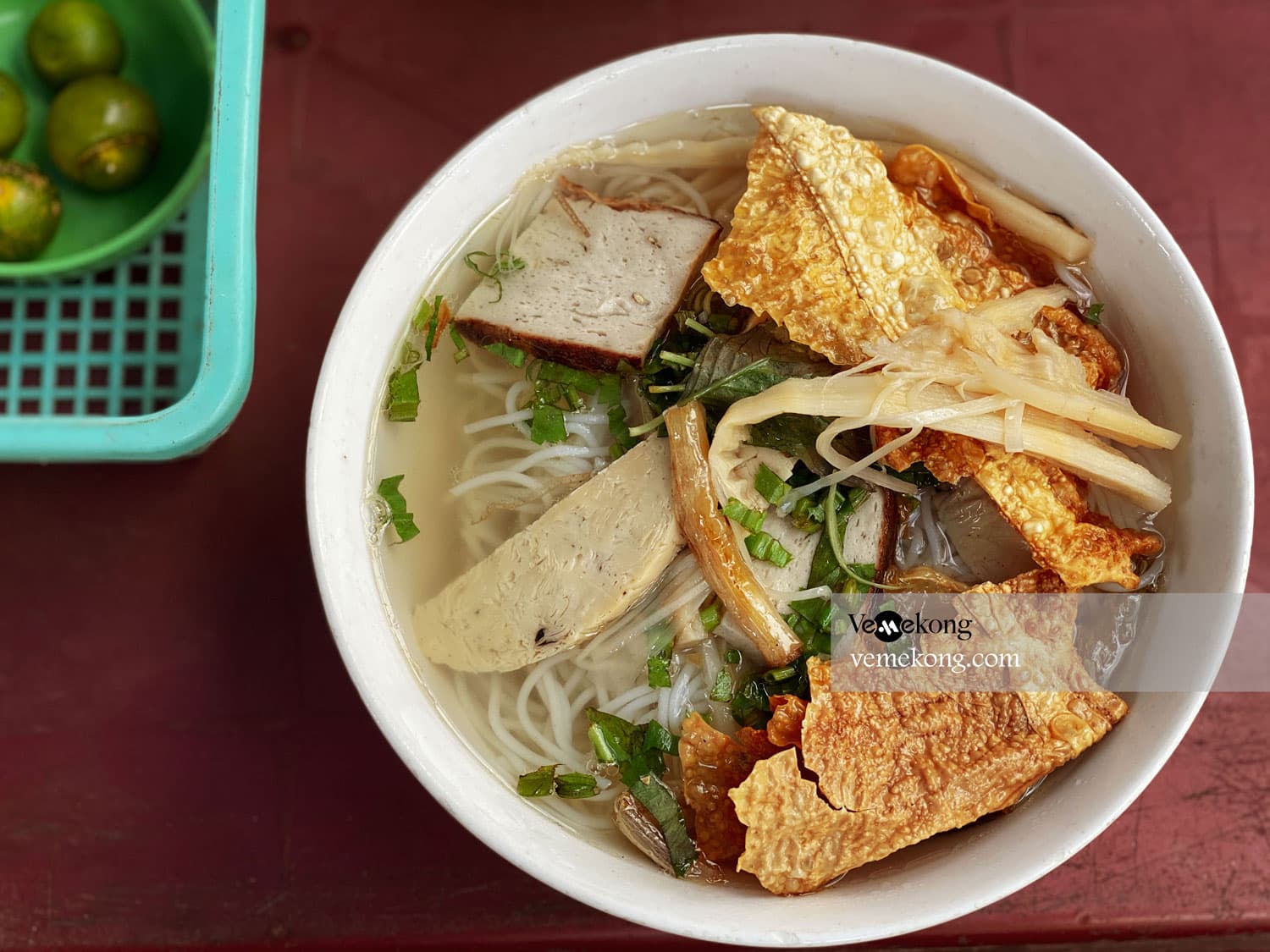
Crab noodle soup is a sour soup cooked from crab bricks, pounded crab body and filtered to get crab meat along with tomatoes, water fat, batch or sudden vinegar, fish sauce, salt, scallions... Crab noodle soup often adds a little shrimp paste to increase it. Add rich flavor, add a little chili for spicy and serve with vegetables: lettuce, chopped young banana stem, water spinach, add a little marjoram, perilla.... The bowl of Crab noodle soup at the floating market has the color of red tomatoes, the color of delicious crab bricks, a little bit of dried onion sprinkled on top and the yellow color of fried beans. Bringing people to enjoy the frugal, cool taste right at the first time "touching eyes".
4. How to Make Crab Noodle Soup
Crab Noodle Soup at Floating Market– Eat Best Food in Can Tho
Ingredients for Crab Noodle Soup for 4 people
-Minced copper crab 1 kg
-Fresh vermicelli 400 gr
-Raw spring rolls 100 gr
-Pork blood 200 gr
-Dried shrimp 50 gr-Dried squid 30 gr
-2 egg yolk
-Pork fat 100 gr
-Tofu 150 gr
-Tomato 500 gr
-Vegetable side 300 gr
-Red onion 100 gr
-Green onions 20 gr
-Cooking oil 150 ml
-Cashew oil 1 tablespoon
-Shrimp paste 20 gr
-Fish sauce 20 ml
-1 little seasoning (pepper/ seasoning/ salt/ sugar/ monosodium glutamate)
Implementation tools
Blender, non-stick pan, steamer, mold
How to choose and buy delicious field crabs
Choose field crabs with a dull purple-gray color, the shell of the crab is lighter in color. If you want to choose a crab with a lot of meat, you should choose a male crab with a small and pointed bib, and if you choose a brick crab, choose a female crab with a larger bib, which is often called a cotton bib.
Choose the ones that still move quickly, have enough claws and legs, and are flexible. Use your hand to press on the bib shell and see if there are air bubbles, the crab is still fresh.
To make delicious crab noodle soup, the crab must be pounded by hand, the new crab meat will be soft, smooth and retain its characteristic flavor. If you don't have time, you can grind the crab with a blender, but the crabmeat is usually porous and gritty.
Do not choose field crabs with red eyes, hairy undersides of crabs or star-dots on the back of the crabs.
How to cook Crab Noodle soup
Step 1. Preliminary processing of crabs
Crab soaked in water for about 1 hour to remove all sand, rinse with clean water. Peel crab bibs and crab shells and set aside.
Use a small spoon to scrape the crab pieces into a bowl, marinate with a little ground pepper and seasoning. Grind or crush the crab bibs.
Put the ground crab in a large bowl and marinate it with a little salt and then add the water, gently squeezing the crab meat into the water. Then, use your hands or sieve to remove the crab carcass to get the water. Comb about 3.5 liters of crab broth.
Crab Noodle Soup at Floating Market– Eat Best Food in Can Tho
Step 2. Prepare other ingredients
Pork fat is washed, cut into small squares, then fried until golden brown (use the pork fat as oil to fry other ingredients). Tofu cut into small pieces and fried until golden brown.
Green onions are washed, half cut into small pieces and half cut into pieces about 3cm. Peeled and sliced purple onions.
Wash tomatoes, cut areca. Pig blood is boiled with water to clean and cut into bite-sized pieces.
Dried shrimp and dried squid are soaked in water for about 30 minutes, then cut into small pieces and fry until golden brown with dried shrimp.
Step 3. Purple onion
Put 150ml of cooking oil in a deep pan (or use the pork fat if there is a lot) to heat, then add sliced purple onions and fry until golden brown.
After the onions are golden brown, add the fat that has been won and fry it, then take it out and let it dry.
Tips for delicious crispy purple onions, no oil
Add 3-4 drops of lemon with a little salt when the oil is not boiling, wait for the oil to boil, then add the onions, so the onions will be crispy and not splattered with oil. Using the right ratio of cooking oil for every 500g of red onion, about 600ml of oil. Let the onions be submerged in the oil and crispy evenly, without burning.
Add the purple onion slowly, but do not pour it all at once, and use chopsticks to stir continuously but gently to prevent the onion from separating.
Step 4. Stir fried crab bricks
Crab Noodle Soup at Floating Market– Eat Best Food in Can Tho
The crab bricks have been separated, you put in the pan with 1 tablespoon of pork fat and stir-fry.
Step 5. Making and steaming
In a bowl, add 100g of raw ham, 2 egg yolks, 1 teaspoon of MSG, a little chopped scallions with a little filtered crab broth and mix well.
Then put this mixture into the mold with about 100 ml of filtered crab broth and steam for about 30-40 minutes until the crab cakes are cooked.
You spread on the surface of the crab cakes a little fried crab bricks to create a beautiful yellow color and increase the flavor.
Step 6. Sauteed Tomato
Put a pan on the stove with a little hot pork fat, add chopped tomatoes, and 1 tablespoon of cashew oil for about 5 minutes.
Step 7. Cooking broth
The fried squid and shrimp are put in the pot, along with the crab carcass, which has been wrapped in cloth. Add 1.5 liters of water to the pot and cook for about 30-40 minutes so that the squid and crab carcasses are sweet.
Remove the body, at this time there is about 1 liter of broth left in the pot, continue to pour 3 liters of filtered crab broth into the pot and cook on low heat so that the crab sauce slowly forms a scum and floats to the surface.
Then add the remaining tomatoes, tofu, pork blood, scallions, and crab bricks into the pot to season with: 60g of sugar, a little monosodium glutamate, 20ml of fish sauce, a little seasoning, pepper and 20g of fish sauce in shrimp.
Small tip: Shrimp paste creates the typical flavor of vermicelli, if you don't like it, you can still leave it out.
Step 8. Finished product
Put the Crab noodle soup in a bowl, cut the steamed crab cake into bite-sized pieces, add the broth with tomatoes, blood, tofu and green onions to enjoy right away.
The broth is sweet and sweet, and the steamed and fatty pork rolls will give you an extremely delicious taste, what's better when served with raw vegetables.
5. Google Maps of Crab Noodle Soup at Floating Market in Can Tho
Google Maps made a name for itself helping people travel from one place to another, avoid traffic (You probably know the route from your hotel to the gas station by heart, but what you can’t be sure about is gridlock), measure a distance, get back to the hotel on time, share the location…
6. Pro tips:
Here are our tips for easing your mind (and stomach) around food-handling environments that you may not be used to.
Make sure the food is freshly cooked. If you're eating hot street food, it's always safest (not to mention more delicious) to eat food you can see being cooked to order.
Look for lines and busy stalls. Busy street food stalls are an indicator of popularity, and their high turnover rate means the food is never sitting out for hours and developing dreaded bacteria. Yes, long lines can be discouraging when you’re hungry after a full day of exploring, but it’s not worth the risk of grabbing precooked food from the empty spot next door.
Eat when the locals are eating. The last and most important element here is when to eat. You’re likely already on a weird eating schedule while you’re traveling, but it’s important to try and adjust to the eating times of where you are. A bowl of pho might be lunch for Americans, but it’s breakfast for the Vietnamese. This ensures that you’re eating freshly cooked food and that you can find the best and most popular places to eat.
If you can’t drink the water, then you can’t eat the salad. Most people get so hung up on not drinking the water or skipping ice in drinks that they don’t think about all of the other ways in which water is used in food service. Fruits and vegetables tend to be washed with tap water in most places, rather than the filtered water that locals drink—or sometimes it’s not washed at all. If you’re really craving some produce, try fruits you can peel or cooked veggies.
Trust your gut. If you’re unsure about the food or the way that it’s being prepared, then keep moving. Eating street food all over the world doesn’t make you an expert. Every stall and every country are different, and sometimes the rules can be harder to follow. When something doesn’t look, smell, or feel right, don’t eat it! Trust your judgment. Chances are that there’s another spot close by that’s making something more delicious.