Nowadays, there are more and more green and responsible tours which are meaningful and educational as well. This is why Can Tho noodle factory is getting popular for both Vietnamese and foreigners to come and explore the cuisine culture and the typical local life in Can Tho, Mekong Delta.
5. Pro tips:
Phu Huong Beef Noodle Soup – Eat Best Food in Chau Doc
Facts: It is called beef noodle soup because the main ingredients for this dish are vermicelli, soup, and fresh beef.
2. Better to Know Phu Huong Beef Noodle Soup
The origin of beef noodle soup
There is much controversy about the origin of this dish. Anecdotes say that this dish is completely Hanoi and that Southern word is the old name of Le Duan street now (However, this theory is rejected by most people). However, this dish is often called fried beef vermicelli or fried pork vermicelli. As noted in many literary works in China, this dish is modified by the chef from the main ingredients including protein: pork loin; starch: vermicelli; vegetables: onions, herbs, and bean sprouts; dressing: lemon, garlic are mixed from fish sauce, vinegar, and sugar, creating a strong Southern flavor that Hanoians often criticize as too sweet, too pungent, and not frugal. A typical example is an excerpt from the book Half-Life Left by writer Vuong Hong Sen, published in 1926, "... 1926, there was an old man who came from Thu Duc carrying beef vermicelli and asked to sell and accompany him. Trains do not pay, please remember beef vermicelli, grilled or fried meat and vermicelli noodles, not beef vermicelli, a special Hue dish….”
3. Phu Huong Beef Noodle Soup in Chau Doc
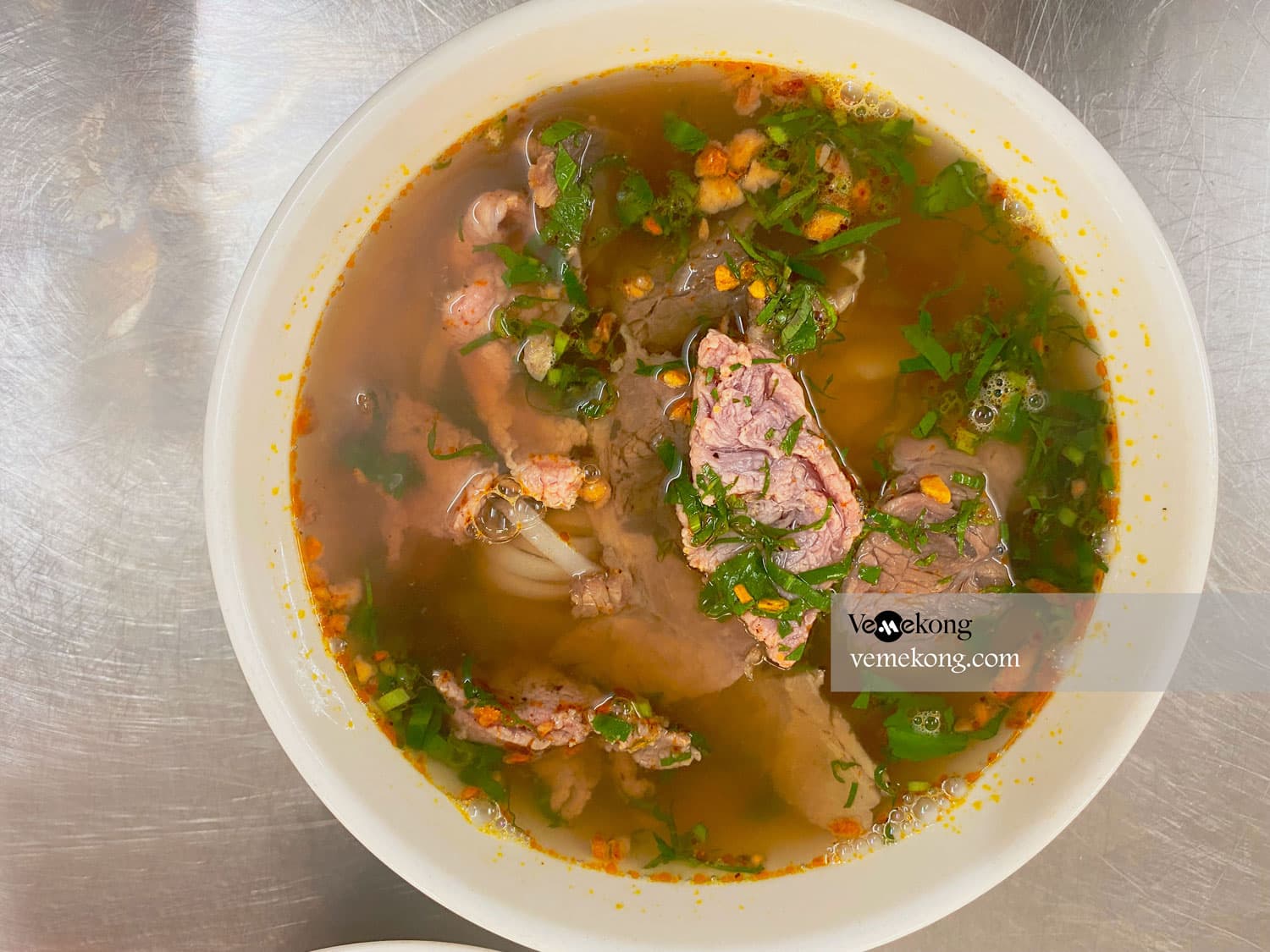
The "soul" of beef noodle soup is the broth. The broth is simmered from beef bones, so it has a rich sweet taste. In addition, people also add a little fish sauce and lemongrass to the broth to create an attractive aroma.
A delicious bowl of beef noodle soup must have an attractive aroma. The bowl of vermicelli has the orange color of cashew oil, the brown color of beef, the pig's blood and the green color of onions, smell, and a little cool bean sprout. The vermicelli with spicy, sweet, salt flavors really captivated the diners.
4. How to Make Phu Huong Beef Noodle Soup
Ingredients for Beef Noodle Soup
Pork leg 1 kg
Beef Stew 500 gr
Large noodle soup 200 gr
Beef or pork blood 1 bowl
Crab or beef patties 200 gr
Cashew color oil 3 tbsp
Lemongrass 7 plants
Onion 2 pieces
Garlic 1 bulb
Ginger 1 piece
Fish sauce 2 tablespoons
Green onion 1 piece
Bean sprouts 1 piece
Smell of Chinese/basil 1 little
Banana flower 1 little
1 lemon
How to choose to buy fresh beef
To choose good beef, you should observe the color of the meat. Fresh meat is usually bright red, not dark red, and beef fat is light yellow.
Should choose to buy small and soft pieces of meat, smooth texture and good elasticity when pressed.
Do not buy pieces of meat that have white, small and easily removable cysts, it is most likely a fluke. You also limit the small pieces of pre-cut meat, because they are very likely to contain flukes.
How to cook Beef noodle soup
Step 1. Preliminary processing of pork leg, beef encrusted
If you like a lot of meat, choose the hind leg. If you like the skin and tendons rough, choose the front leg, cut it into circles, and wash it.
Boil pork leg in boiling water to remove dirt, then rinse with clean water.
Beef jerky, washed, boiled separately with 1/2 sliced ginger for fragrant. Simmer on low heat for about 2 hours, use chopsticks to test the encrusted pieces, if the skewers pass, they are satisfactory. Wait for the meat to cool and cut into thin slices.
Step 2. Prepare other ingredients
Cow or pig blood can be bought ready-made or bought boiled, cut into bite-sized pieces. (Note to buy blood at reputable addresses to ensure food safety). If you don't eat blood, you can skip it.
The crab cakes are molded into small round balls and dropped into the pot of encrusted boiling water, the spring rolls are cooked, you take them out and keep them separate. Crab rolls can be replaced with beef rolls, spring rolls or not for spring rolls.
With 4 chopped lemongrass trees, the rest is cut and smashed. Divide the onion into 2 parts, one half cut in half, the other thinly sliced.
Scallions, scallions, basil washed and finely chopped. The accompanying vegetables are washed and drained.
Step 3. Beef noodle soup
Mix 2 tablespoons of fish sauce with 100 ml of cold water.
Fry 4 minced lemongrass plants with 2 tablespoons of cooking oil, remove the lemongrass, and add 3 tablespoons of cashew oil. Finely chop 1 onion, 1 garlic, and 2 chili peppers, then put them in a pan and fry until golden, then turn off the heat.
Prepared pork leg, you put it on the stove to simmer on low heat with 1 onion cut in half and 3 lemongrass trees smashed for a sweet and fragrant broth, all the substance in the bone. (Note that occasionally skim the pot of broth so that the water is clear).
Take the top part of the fish sauce into the pot, remove the residue. Add 2 tablespoons of sugar, 2 tablespoons of seasoning, 1 tablespoon of salt, season to taste.
Add the bowl of chili satay made above.
Step 4. Complete
You pour vermicelli through boiling water, drain and pour into a bowl.
Add encrusted meat, spring rolls, crab cakes, blood, Chinese flavor, finely chopped scallions, a little thinly sliced onion and then pour the broth.
Beef noodle soup served with bean sprouts, banana flowers, basil, and chili are delicious.
Step 5. Finished product
On a cool or chilly morning, there's nothing better than a delicious bowl of beef noodle soup with the whole family.
The sweetness of the water, the greasy taste of the spring rolls, the crunchy and soft taste of the encrusted meat, the fragrant crab cakes with a little spicy chili and the sourness of lemon. Just thinking about it makes me feel dizzy and crave a bowl of beef noodle soup
5. Pro tips:
Here are our tips for easing your mind (and stomach) around food-handling environments that you may not be used to.
Make sure the food is freshly cooked. If you're eating hot street food, it's always safest (not to mention more delicious) to eat food you can see being cooked to order.
Look for lines and busy stalls. Busy street food stalls are an indicator of popularity, and their high turnover rate means the food is never sitting out for hours and developing dreaded bacteria. Yes, long lines can be discouraging when you’re hungry after a full day of exploring, but it’s not worth the risk of grabbing precooked food from the empty spot next door.
Eat when the locals are eating. The last and most important element here is when to eat. You’re likely already on a weird eating schedule while you’re traveling, but it’s important to try and adjust to the eating times of where you are. A bowl of pho might be lunch for Americans, but it’s breakfast for the Vietnamese. This ensures that you’re eating freshly cooked food and that you can find the best and most popular places to eat.
If you can’t drink the water, then you can’t eat the salad. Most people get so hung up on not drinking the water or skipping ice in drinks that they don’t think about all of the other ways in which water is used in food service. Fruits and vegetables tend to be washed with tap water in most places, rather than the filtered water that locals drink—or sometimes it’s not washed at all. If you’re really craving some produce, try fruits you can peel or cooked veggies.
Trust your gut. If you’re unsure about the food or the way that it’s being prepared, then keep moving. Eating street food all over the world doesn’t make you an expert. Every stall and every country are different, and sometimes the rules can be harder to follow. When something doesn’t look, smell, or feel right, don’t eat it! Trust your judgment. Chances are that there’s another spot close by that’s making something more delicious.